Ornaments
Ornaments decorate a note with extra, usually quicker, neighbouring notes.
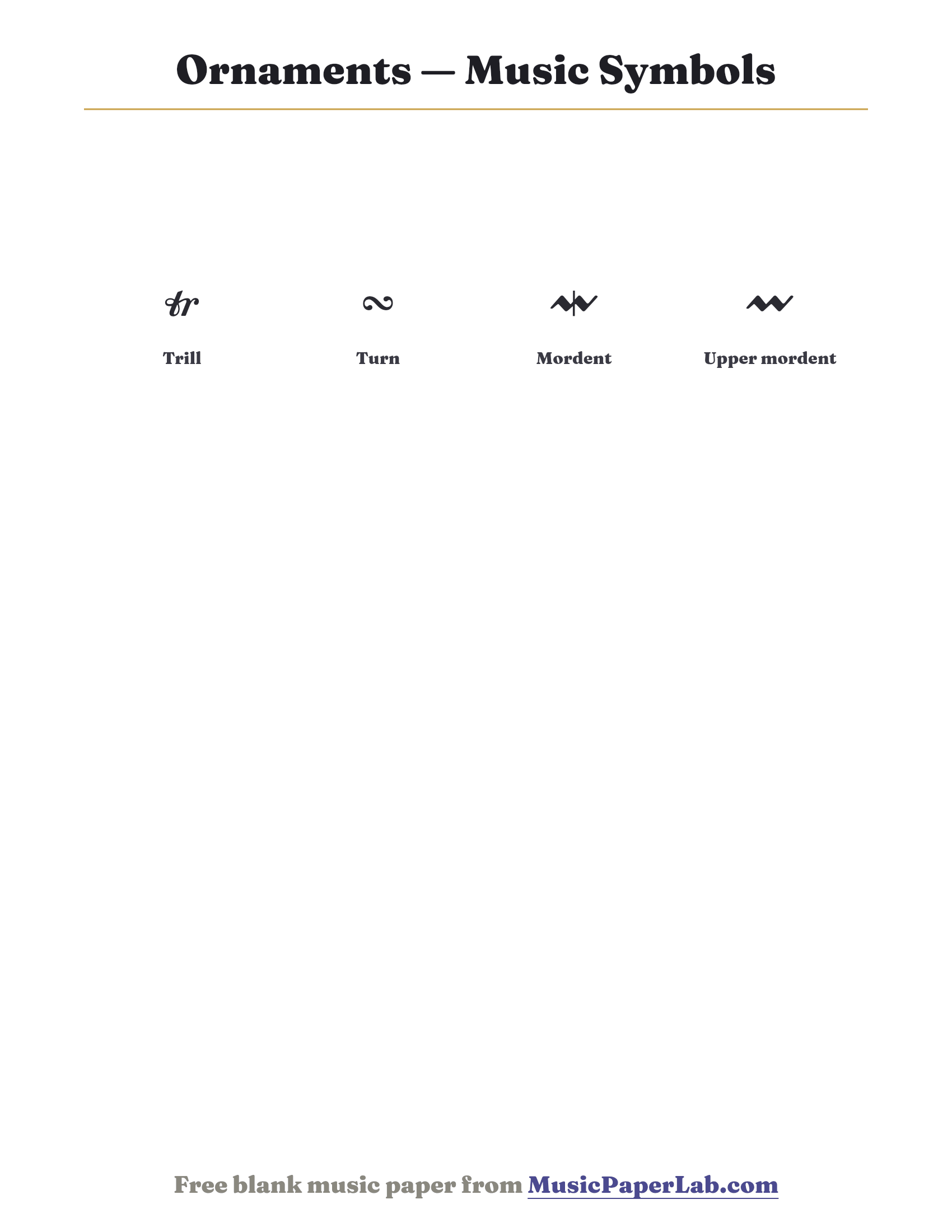
Ornaments explained
- Trill
- Rapidly alternate between the written note and the note above it, usually for the note’s full length.
- Turn
- Play the note above, the written note, the note below, then the written note again.
- Mordent
- A zigzag with a vertical stroke through it. Play the written note, quickly drop to the note below, and return — sometimes called a lower mordent.
- Upper mordent
- The same zigzag without the stroke. Play the written note, flick up to the note above, and return. Also called an inverted mordent or short trill.
Ornaments — frequently asked questions
What ornaments are used in sheet music?
This page covers 4: Trill, Turn, Mordent, Upper mordent.
What does the trill symbol mean?
Rapidly alternate between the written note and the note above it, usually for the note’s full length.
What does the turn symbol mean?
Play the note above, the written note, the note below, then the written note again.
What does the mordent symbol mean?
A zigzag with a vertical stroke through it. Play the written note, quickly drop to the note below, and return — sometimes called a lower mordent.
What does the upper mordent symbol mean?
The same zigzag without the stroke. Play the written note, flick up to the note above, and return. Also called an inverted mordent or short trill.
Is the ornaments chart free to print?
Yes — print it or download the PDF or PNG for free, with no sign-up.