Articulations
Articulations shape how a single note is attacked and released — short, held, or accented.
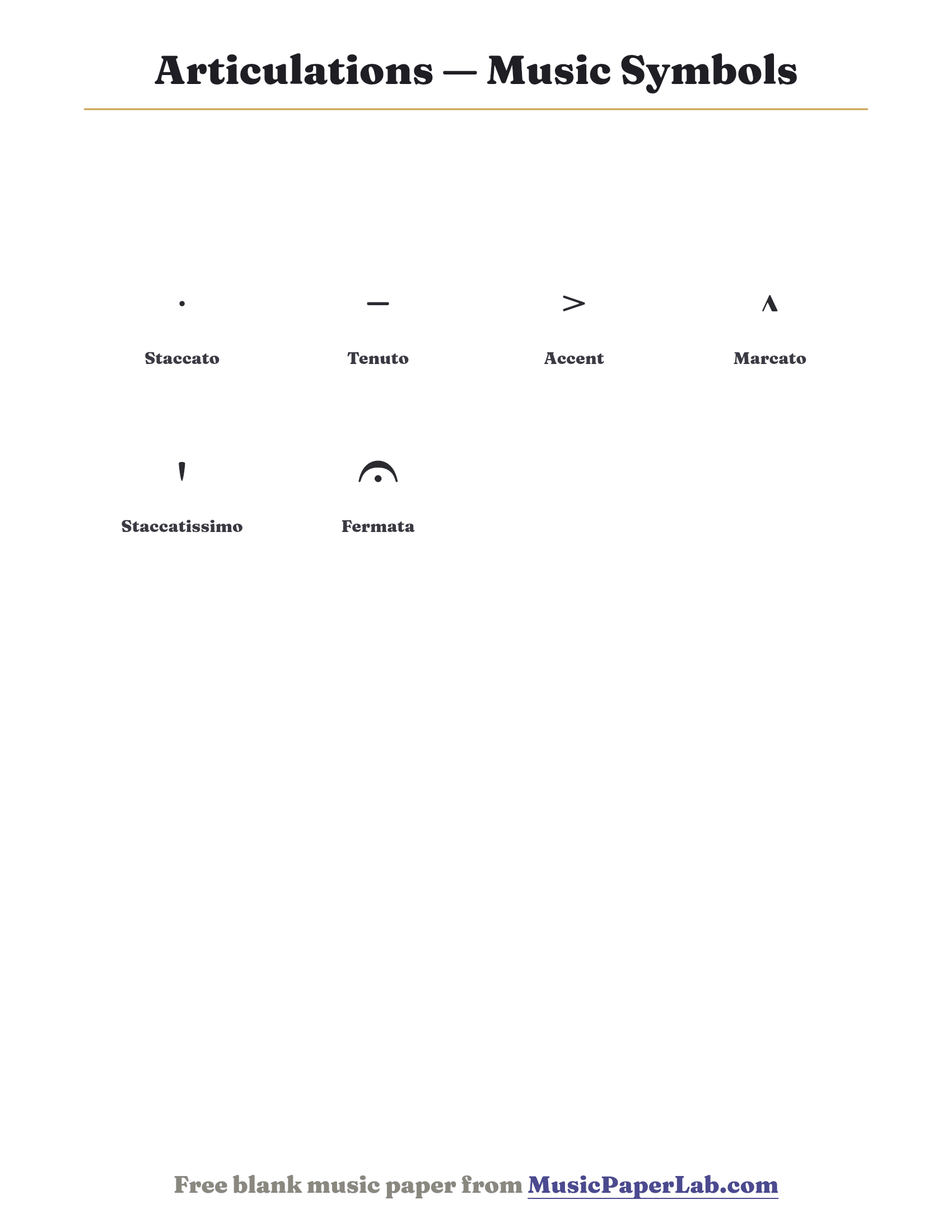
Articulations explained
- Staccato
- A dot above or below the note: play it short and detached, roughly half its written length.
- Tenuto
- A short line: hold the note for its full value, slightly stressed.
- Accent
- A horizontal wedge: attack the note more strongly than those around it.
- Marcato
- A vertical wedge: strongly accented and usually slightly shortened — heavier than a normal accent.
- Staccatissimo
- A small vertical wedge: even shorter and more clipped than staccato.
- Fermata
- A "pause": hold the note or rest for longer than written, at the performer’s discretion.
Articulations — frequently asked questions
What articulations are used in sheet music?
This page covers 6: Staccato, Tenuto, Accent, Marcato, Staccatissimo, Fermata.
What does the staccato symbol mean?
A dot above or below the note: play it short and detached, roughly half its written length.
What does the tenuto symbol mean?
A short line: hold the note for its full value, slightly stressed.
What does the accent symbol mean?
A horizontal wedge: attack the note more strongly than those around it.
What does the marcato symbol mean?
A vertical wedge: strongly accented and usually slightly shortened — heavier than a normal accent.
Is the articulations chart free to print?
Yes — print it or download the PDF or PNG for free, with no sign-up.